
Setting Boundaries: Your Professional and Personal Protection
In Australian workplaces the ability to set and maintain healthy boundaries isn't just a personal preference. It's essential protection for your mental health and wellbeing. Under Australian Work Health and Safety laws, employers must look after both your physical and mental health (Safe Work Australia, 2022). Yet the responsibility for boundary management ultimately sits with each individual worker, making boundary-setting skills a critical component of workplace mental health.
What Are Boundaries, Really?

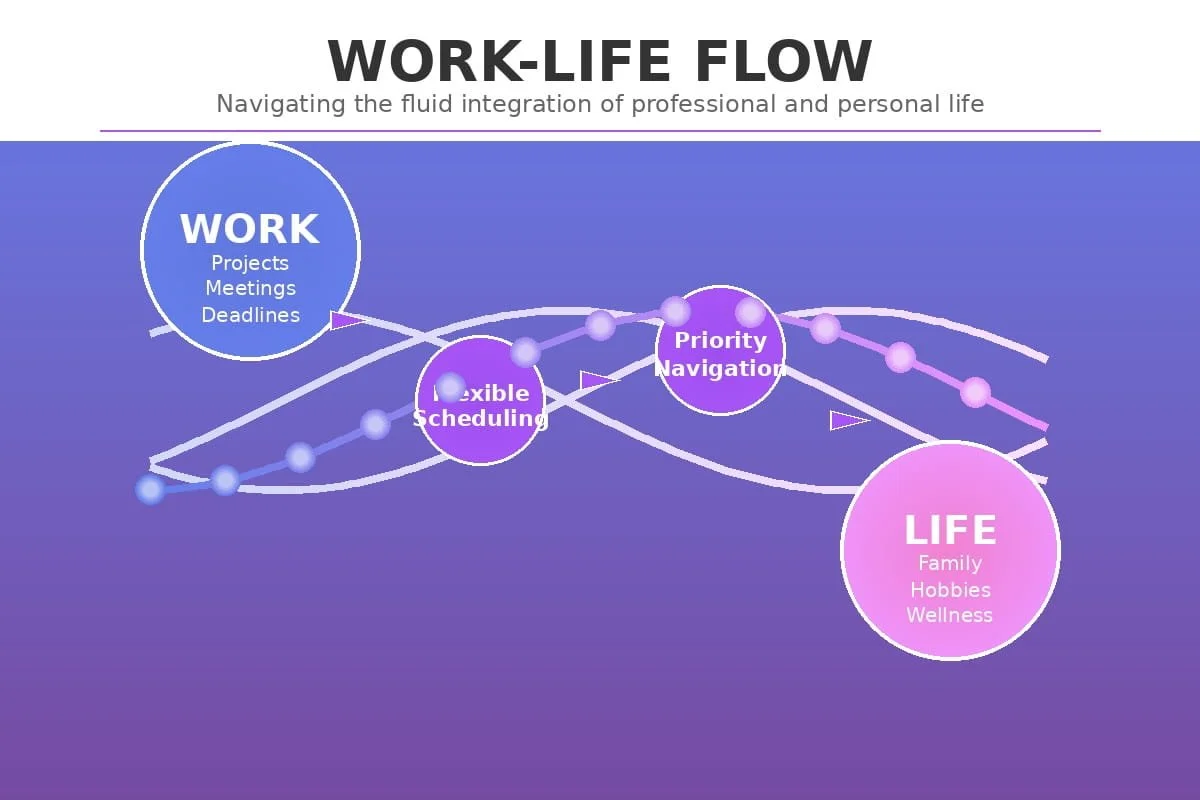
Think of boundaries as the lines you draw between work and the rest of your life. They're not brick walls—they're more like flexible fences that you can adjust depending on what you need. How much we allow one area of our life to influence another—directly impacts our psychological wellbeing and risk of burnout.
Research shows that "boundary fit" is a crucial factor in workplace wellbeing. Boundary fit occurs when there's alignment between your preferred boundaries and your enacted boundaries. When there's a mismatch between these, workers can feel more stressed, emotionally drained, and generally worse off (Kreiner, 2006).
The Australian Workplace Reality
The Australian workplace landscape presents unique boundary challenges. Our cultural expectation of mateship and "pitching in" can make boundary-setting feel countercultural. Many workers, pride themselves on reliability and availability, which can inadvertently lead to boundary erosion. Add to this the reality of penalty rates, shift work, and industries that never sleep, and boundary management becomes both more complex and more critical.
“According to Beyond Blue (2024) poor mental health costs Australian businesses approximately $39 billion annually in lost productivity.”
Under recent amendments to WHS regulations across Australian states and territories, psychosocial hazards—including excessive job demands, poor work-life balance, and inadequate support—must now be actively managed (SafeWork NSW, 2022). This regulatory shift acknowledges what research has long established: inadequate boundaries contribute directly to psychological harm.
When boundaries break down, people get hurt.
The Cost of Boundary Erosion
Research consistently shows that blurred work-life boundaries can lead to emotional exhaustion, which in turn reduces happiness and overall wellbeing. When boundaries dissolve, particularly in remote or flexible work arrangements, workers face increased risk of overwork, job stress, and declining mental health. The vicious cycle is well-documented: blurred boundaries create stress, stress undermines healthy lifestyle behaviours, poor lifestyle further reduces wellbeing, and reduced wellbeing makes boundary management even more difficult.

For healthcare workers, first responders, and those in caring professions, the consequences are particularly severe. Studies show that establishing clear professional and personal boundaries reduces emotional exhaustion by up to 45% and helps maintain therapeutic relationships while preserving mental health. Without boundaries, workers become vulnerable to compassion fatigue, vicarious trauma, and burnout—conditions that not only harm the individual but compromise service quality and safety outcomes.
Practical Boundary Strategies
There are four main types of boundaries you can use:
1. Time Boundaries
Time boundaries involve controlling when work happens. They work best when consistently applied:
Set specific work hours, even in flexible arrangements
Create transitioning rituals that mark the switch between work and home (this is especially important for FIFO workers)
Take your breaks—you're entitled to them under Australian law, so actually use them
Decide when you'll check work messages and stick to those times
Research on remote workers found that time boundaries significantly improved work-life balance, especially for people who like to keep work and home separate.
2. Physical Boundaries
Physical boundaries are about using space to separate work and personal life:
If you work from home, set up a dedicated work area, even if it's just a corner of a room
Use physical signals to show when you're "at work" versus "at home"
Keep work stuff out of your bedroom and relaxation spaces
If you're a shift worker, have a clear space for rest and recovery between shifts
Studies show that when work and home share the same physical space, you need to deliberately create new boundaries to make up for it.
3. Behaviour Tactics
Behavioural tactics involve enlisting others' help in maintaining boundaries:
Communicating your boundaries clearly to supervisors, colleagues, and family
If mental health issues affect your work capacity, be open with your manager or supervisor and consider what adjustments you may need in the short term to support you in your work role.
Learn to delegate instead of taking on everything yourself
Build a support network that helps you stick to your boundaries
Research shows that when supervisors support work-life balance, it's much easier for workers to maintain boundaries and reduce work-family conflict.
4. Communication Boundaries
These involve clearly stating when you're available:
Be clear about when you can and can't be contacted
Use out-of-office messages that set realistic expectations
Practice saying no clearly and respectfully
Check in regularly with your supervisor about workload
Studies of workplace programs show that clear boundary communication, backed by organisational support, significantly reduces burnout.
A Simple Three-Step Approach
Based on research by Herbst and colleagues (2023), effective boundary setting follows a three-step process:
Step 1: Assessment
Start by evaluating your current situation:
Where are your boundaries weak or missing?
How confident do you feel setting boundaries in different situations?
What risks to your wellbeing are you facing because your boundaries aren't working?
Are the boundaries you want the same as the ones you actually have?
Step 2: Build Your Skills
Boundary-setting is a skill you can learn:
Start practicing in easier situations to build confidence
Learn how to communicate effectively
Prepare what you'll say in common boundary-setting situations
Accept that it will feel uncomfortable at first—that's normal
Research shows that people who get training in boundary-setting experience less burnout and workplace stress over time (Herbst et al., 2023).
Step 3: Keep It Going
Boundaries need regular attention:
Reflect on what's working and what isn't
Adjust as your situation changes
Get back on track when boundaries slip
Remember it gets easier—eventually boundary-setting becomes automatic
Your boundaries should align with what matters to you, and you may need to reassess them as your priorities shift.
Practical Tips
Here are some suggestions for boundary practices in different work situations:
For FIFO and Shift Workers:
Create clear routines that mark the shift from work to personal time
Protect your sleep fiercely—lack of sleep dramatically increases burnout risk
Use your roster to plan protected personal time
Make sure family know your schedule and set aside dedicated family time
For Emergency Services and First Responders:
Set limits on exposure to traumatic/explicit content when it's not necessary (such as news reports, horror or thriller movies etc)
Build in decompression time between work and home
Set boundaries around taking work calls when you're off-duty (unless it's genuinely urgent)
Use collegial support and Employee Assistance Programs
For Healthcare and Caring Professionals:
Maintain professional boundaries while still being compassionate
Actually take your breaks, even on busy shifts
Set clear times for paperwork—don't let it eat into all your personal time
Protect your days off for genuine rest
For Everyone:
Know your rights under the Fair Work Act and National Employment Standards
Document situations where boundary violations create problems
Talk to HR, your EAP or a psychologist when you need support
When to Get Help
If you're struggling to set boundaries or you're showing signs of burnout—constant exhaustion, feeling cynical about work, or feeling like you're not achieving anything—get professional support. A Psychologist or your Employee Assistance Program can offer confidential help to develop boundary skills and address underlying issues.
“Getting help isn’t weakness—it’s smart professional practice.”
The Bottom Line
Setting boundaries isn't about building walls between work and life—it's about creating sensible limits that protect your wellbeing while letting you do your job well. In workplaces where job demands can make boundaries feel awkward or difficult, developing these skills is both professional protection and genuine self-care.
The evidence is clear: healthy boundaries are essential for preventing burnout, maintaining mental health, and sustaining long-term career satisfaction. Learning boundary skills is an investment that will pay off throughout your working life.
Your wellbeing matters. While your employer has responsibilities to create a healthy workplace, the skills to protect yourself are yours to build.
FOR A SUMMARY OF THIS BLOG PLEASE DOWNLOAD OUR NEWSLETTER ON BURNOUT.
-
Allen, T. D., & French, K. A. (2023). Work–family boundary management. In J. R. B. Halbesleben (Ed.), Handbook of stress and burnout in health care (pp. 155-171). Cambridge University Press.
Allen, T. D., Merlo, K., Lawrence, R. C., Slutsky, J., & Gray, C. E. (2021). Boundary management and work‐nonwork balance while working from home. Applied Psychology, 70(1), 60-84. https://doi.org/10.1111/apps.12300
Ashforth, B. E., Kreiner, G. E., & Fugate, M. (2000). All in a day's work: Boundaries and micro role transitions. Academy of Management Review, 25(3), 472-491. https://doi.org/10.5465/amr.2000.3363315
Beyond Blue. (2024). Work and mental health. Retrieved from https://www.beyondblue.org.au/mental-health/work
Clark, S. C. (2000). Work/family border theory: A new theory of work/family balance. Human Relations, 53(6), 747-770. https://doi.org/10.1177/0018726700536001
Eddleston, K. A., & Mulki, J. (2017). Toward understanding remote workers' management of work–family boundaries: The complexity of workplace embeddedness. Group & Organization Management, 42(3), 346-387. https://doi.org/10.1177/1059601115619548
headspace. (2024). Managing your mental health in the workplace. Retrieved from https://headspace.org.au/explore-topics/for-young-people/mental-health-at-work/
Herbst, R., Sump, C., & Riddle, S. (2023). Staying in bounds: A framework for setting workplace boundaries to promote physician wellness. Journal of Hospital Medicine, 18(7), 627-632. https://doi.org/10.1002/jhm.13102
Kreiner, G. E. (2006). Consequences of work-home segmentation or integration: A person-environment fit perspective. Journal of Organizational Behavior, 27(4), 485-507. https://doi.org/10.1002/job.386
Kreiner, G. E., Hollensbe, E. C., & Sheep, M. L. (2009). Balancing borders and bridges: Negotiating the work-home interface via boundary work tactics. Academy of Management Journal, 52(4), 704-730. https://doi.org/10.5465/amj.2009.43669916
Michel, J. S., O'Neill, S. K., Hartman, P., & Lorys, A. (2022). Amazon Mechanical Turk as a viable source for organizational and occupational health research. Occupational Health Science, 6, 103-138. https://doi.org/10.1007/s41542-021-00098-x
Murfield, J., Remus, A., Parker, R., Maeder, A., & Caputi, P. (2023). Workplace interventions to improve well-being and reduce burnout for nurses, physicians and allied healthcare professionals: A systematic review. BMJ Open, 13(6), e071203. https://doi.org/10.1136/bmjopen-2022-071203
NurseRegistry. (2024). How to prevent nurse burnout. Retrieved from https://www.nurseregistry.com/blog/how-to-prevent-nurse-burnout/
Perrigino, M. B., & Raveendhran, R. (2020). Insights from organizational research on boundary management during (& after) the COVID-19 remote work transition. Behavioral Science & Policy, 6(2), 87-94. https://doi.org/10.1177/237946152000600208
Pluut, H., & Wonders, J. (2020). Not able to lead a healthy life when you need it the most: Dual role of lifestyle behaviors in the association of blurred work-life boundaries with well-being. Frontiers in Psychology, 11, 607294. https://doi.org/10.3389/fpsyg.2020.607294
Safe Work Australia. (2022). Model Code of Practice: Managing psychosocial hazards at work. Retrieved from https://www.safeworkaustralia.gov.au/
SafeWork NSW. (2022). Code of practice: Managing psychosocial hazards at work. Retrieved from https://www.safework.nsw.gov.au/resource-library/list-of-all-codes-of-practice/codes-of-practice/managing-psychosocial-hazards-at-work
Stewart, N. H., & Aurora, R. N. (2019). Sleep and burnout. In J. R. B. Halbesleben (Ed.), Handbook of stress and burnout in health care (pp. 89-106). Cambridge University Press.
-
DISCLAIMER: The information provided in these blog posts is intended for general educational and informational purposes only. It is not a substitute for professional psychological assessment, diagnosis, or treatment. Individuals should not rely upon this content as professional advice, nor should it be used to guide or replace clinical decision-making.
Although all content is written by qualified mental-health professionals and draws upon contemporary psychological research and recognised frameworks (e.g., APS Code of Ethics, 2014; AHPRA Guidelines for Advertising Regulated Health Services, 2020), the material may not apply to every person or circumstance. Psychological needs are highly individual, and effective care requires a personalised clinical assessment. Reading these posts does not create a therapeutic relationship with Ashcliffe Psychology or any of its clinicians. In an emergency, call 000 or attend your nearest emergency department. If you are experiencing distress, concerned about your mental health, or require support, please contact a registered health professional. Ashcliffe Psychology makes no warranty regarding the accuracy, completeness, or applicability of the content at any point in time. Blog posts may refer to sensitive topics and may be updated or removed as needed to ensure compliance with professional and regulatory standards.
Use of Artificial Intelligence: Ashcliffe Psychology may utilise artificial intelligence (AI) tools in limited circumstances to support content development. Any material generated or informed by AI undergoes review by qualified clinicians to ensure accuracy, legitimacy, and alignment with professional, ethical, and regulatory requirements before publication.
